Red brake warning light: parking brake, low fluid or a brake fault?
In short
The red brake light means the parking brake is on, the brake fluid is low or the system has a fault. How to tell which, what to check, and when not to drive.
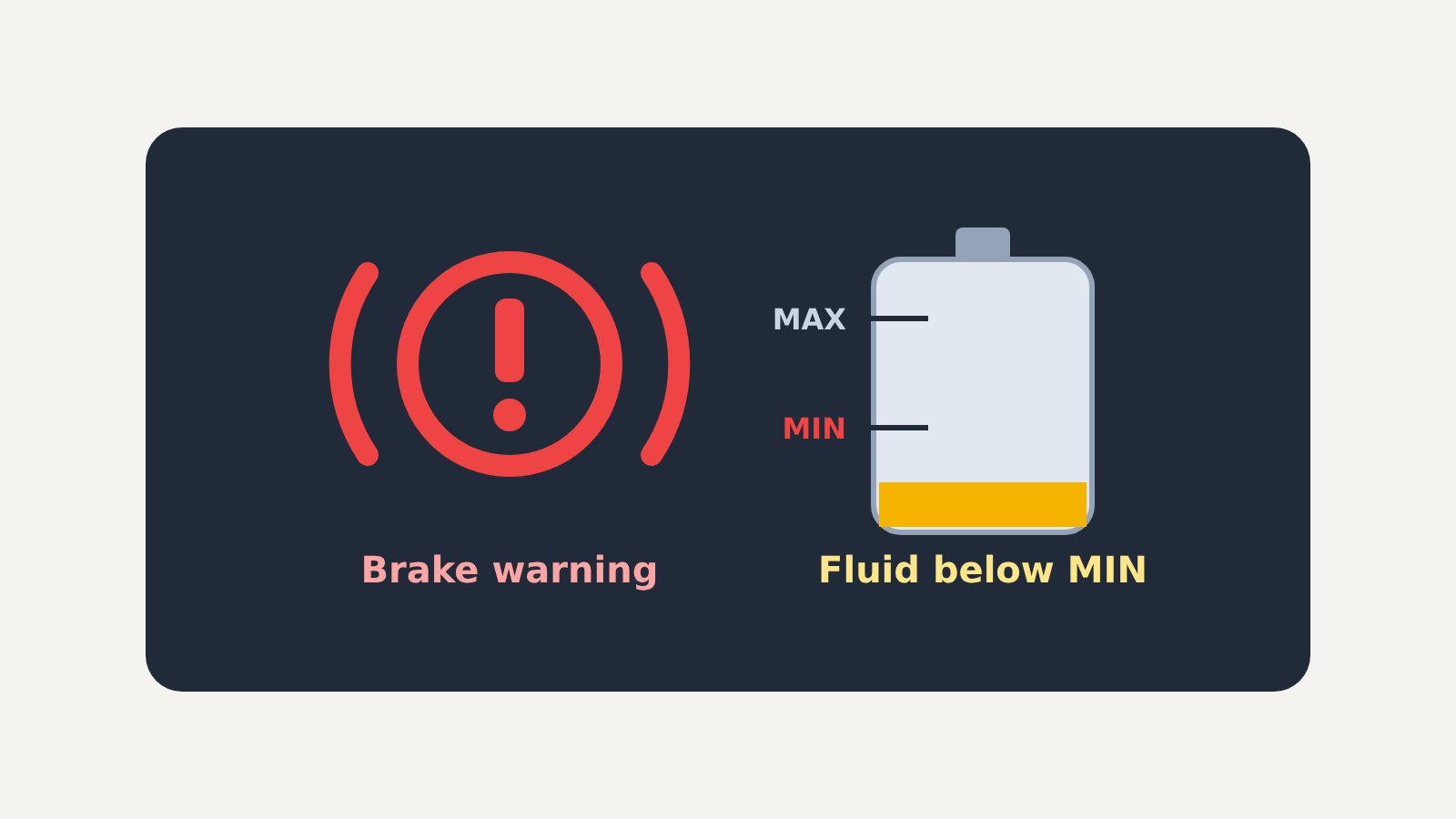
A red brake warning light means one of three things: the parking brake is still on, the brake fluid is low, or the car has found a fault in its braking system. If releasing the parking brake doesn't make it go out, treat it as "stop now": pull over as soon as it is safe and check before you drive further, because your brakes may not work as they should.
The symbol is an exclamation mark inside a circle, between two curved brackets. On many cars sold in the US and Canada it is the word BRAKE instead, and cars with an electronic parking brake usually show a separate red P in a circle for the parking brake itself. Some cars add a message such as "Brake fluid low" or "Brake system fault". Your owner's manual lists the exact symbols and messages for your model.
Which light, and what it means
Most warning lights, the brake light included, come on for a moment when you switch on the ignition as a bulb check. If it goes out by the time you're ready to drive, that's normal.
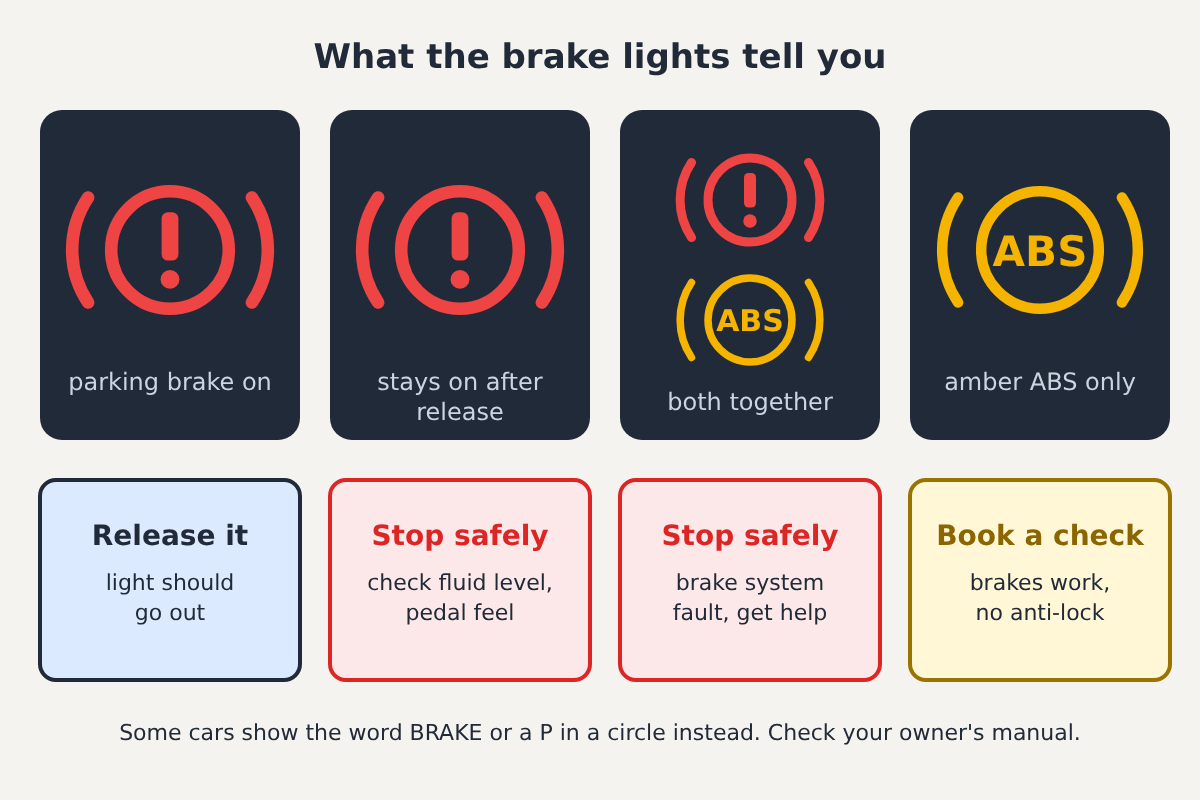
Parking brake on. By far the most common reason. Release the lever or press the parking brake switch fully, and the light should go out. If you have been driving with it partly on, you may smell hot brakes; let them cool before you go on.
Light stays on after the parking brake is released. On most cars this means the brake fluid in the reservoir has dropped below the minimum mark. Fluid level falls slowly as the brake pads wear, which is normal over months, but a sudden drop, or a level well below MIN, usually means a leak. A leak can let air into the system and make the brakes weak.
Red brake and amber ABS lights together. On many cars this means a fault in the system that balances braking between the front and rear wheels. The brakes still work, but the rear wheels can lock up more easily in a hard stop, and the car can slide. Stop when it's safe, and get the car checked before you drive on; your manual says what your model means by this combination.
Amber ABS light on its own. The anti-lock system is switched off because of a fault. Normal braking still works, but the wheels can lock in an emergency stop, so leave more distance and book a check soon. Our guide to the ABS warning light covers its usual causes, from a dirty wheel sensor to low fluid. Amber means "fix soon"; red means "stop".
What to do now
- Check the parking brake first. Make sure it is fully released.
- If the light stays on, test the pedal gently while you slow down. A pedal that feels soft or spongy, sinks further than usual, or a car that takes longer to stop are all signs to stop as soon as it's safe.
- Pull over somewhere safe, away from traffic, and switch on the hazard lights.
- Don't drive on to "see if it goes away". A brake fault can get worse quickly.
What to check when you've stopped
With the engine off, open the bonnet and find the brake fluid reservoir. It is a small translucent plastic tank, usually at the back of the engine bay on the driver's side, with a cap marked with a brake symbol or the fluid type. Your owner's manual shows exactly where.
- Level between MIN and MAX: fluid isn't the cause. The fault is likely a sensor, a switch or the brake system itself, which needs a garage to read the fault codes.
- Level below MIN: look behind each wheel and under the car for wet patches. Brake fluid is clear to yellowish-brown and feels oily.
Topping up is only a way to get the car to a garage, not a fix. If you do it, use only the fluid type printed on the reservoir cap or in your manual (for example DOT 4), keep the cap and the area around it clean, and wipe up any spills at once, because brake fluid damages paint. Fluid doesn't go missing on its own: either the pads are worn, or there is a leak, and both need checking.
Can you keep driving?
Only if it was the parking brake and the light went out. Otherwise:
- Fluid low, no leaks visible and the pedal feels firm: drive slowly and carefully to the nearest garage, leaving extra distance.
- Pedal soft or sinking, visible leak, fluid very low, or red brake and amber ABS together: don't drive. Call for roadside assistance and have the car towed.
Brake warnings are among the few lights where guessing is never worth it. If in doubt, stop. For other red warnings, the red oil pressure light and an overheating engine also mean stop, and a red battery light while driving means you have limited time to reach somewhere safe. An amber tire pressure warning is less urgent, but on a soft tire the car also takes longer to stop.
