Red oil pressure warning light: what it means and why you should stop
In short
A red oil can on the dashboard means the engine has lost oil pressure. Stop as soon as it is safe and switch off. Here is how to check the oil, when you can drive on, and how the amber oil light differs.
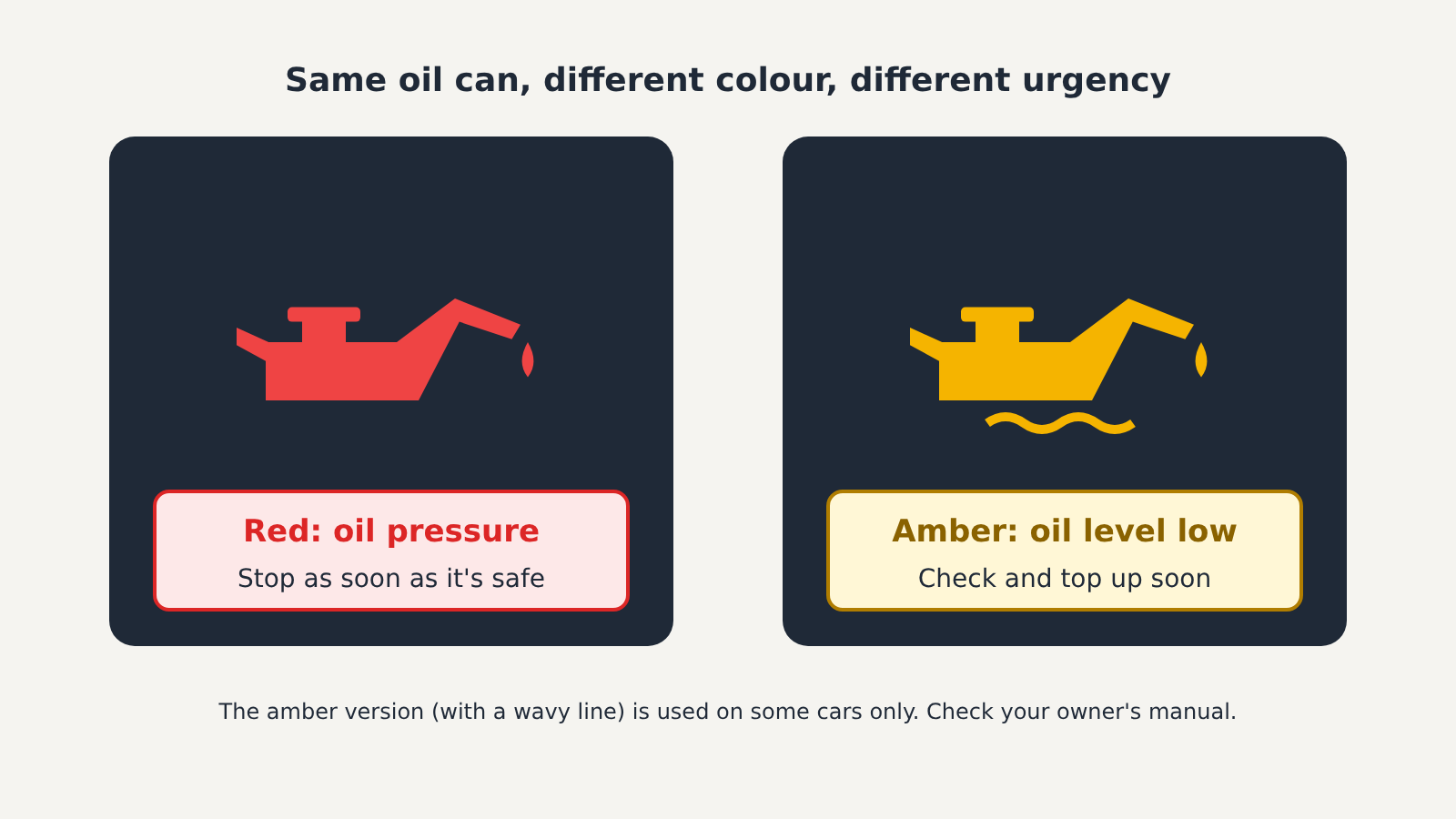
A red oil can light on the dashboard means the engine has lost oil pressure: the oil pump can't push enough oil around the engine to protect its moving parts. Treat it as "stop now". Pull over as soon as it is safe, switch the engine off and don't restart it until you know the cause. Driving on with low oil pressure can cause serious engine damage very quickly.
The symbol is the same on almost every car: an old-fashioned oil can with a drop falling from its spout, shown in red. The owner's manual for your make and model is the final word on what it means for your car and what to do; the steps below follow the advice those manuals give in common.
Red light or amber light?
Many cars, especially European makes, have a second oil warning: an amber or yellow oil can, often with a wavy line under it, or a text message such as "Oil level low" or "Check oil level". That one means the level is getting low but the engine still has pressure. Top up at the next safe chance, within the same day. If your car only has the red symbol, any oil light should be treated as the red one.
Some cars also show a separate "oil change due" or service reminder, usually as a spanner symbol or a message. That's a maintenance reminder, not a fault.
What to do when the red light comes on
- Get off the road safely. Signal, move to the shoulder or a car park, and stop. Don't brake hard or stop in a live lane unless the engine is making knocking or grinding noises, in which case stop as soon as you can do it without danger.
- Switch the engine off. Every second the engine runs without pressure, metal parts rub on metal.
- Wait five to ten minutes. This lets oil drain back into the sump so the dipstick reads correctly, and lets the engine cool before you open the bonnet.
- Check the oil level (next section). Look under the car too: a fresh puddle or oil spraying around the engine bay points to a leak.
- Decide whether to drive on. If the level was low and topping it up makes the light go out when you restart, you can drive on carefully to a garage to find out why it was low. If the level is fine and the light comes back, or there's no oil to hand, don't drive. Call for roadside assistance and have the car towed.
If the light flickers rather than stays on, for example at idle or when you go round corners or brake, the oil level is often just low enough for oil to slosh away from the pump pickup. Check the level the same way; flickering still means stop and check, not ignore.
How to check the oil level
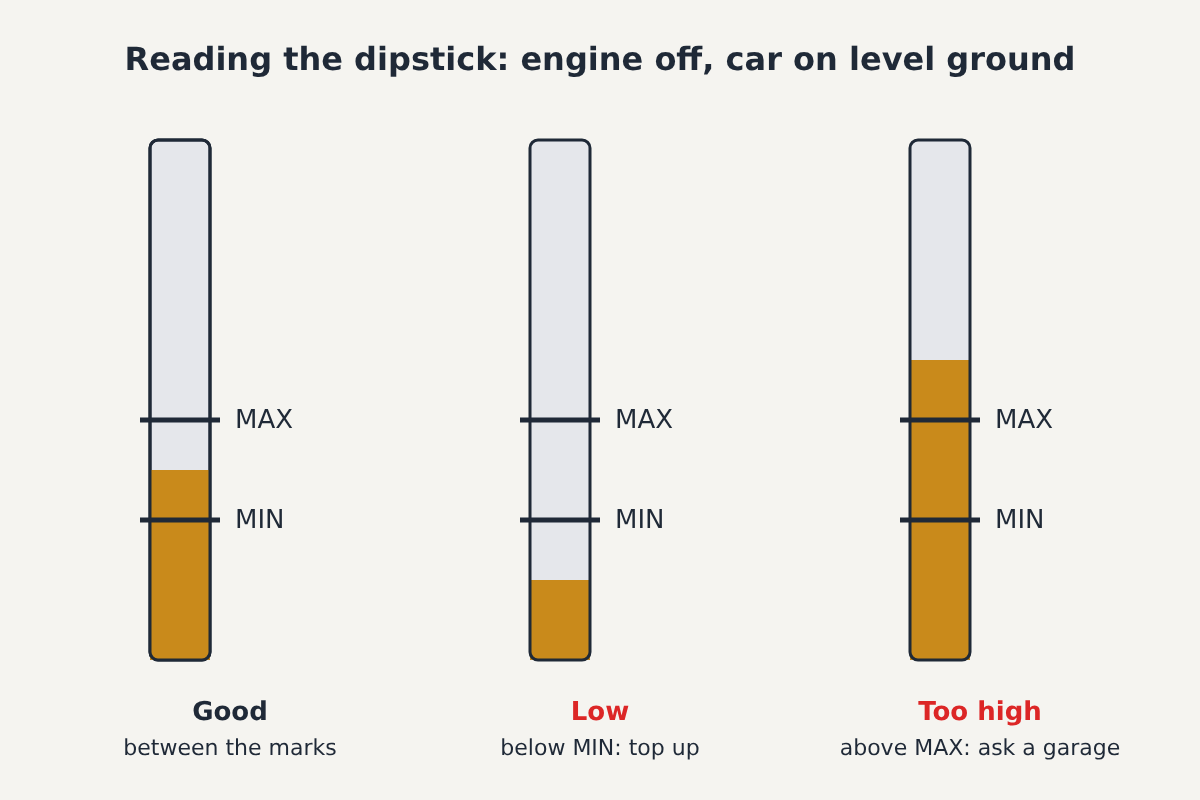
Park on level ground with the engine off. Find the dipstick (usually a yellow or orange loop handle), pull it out, wipe it clean, push it fully back in and pull it out again. The oil should sit between the two marks, often labelled MIN and MAX or shown as two dots or a cross-hatched area.
Some newer cars have no dipstick and show the oil level on the dashboard screen instead. Your owner's manual explains where to find it; most need the engine warm and the car level, and take a minute to measure.
If it's low, add the oil grade printed in your owner's manual (for example 5W-30, plus any manufacturer approval it lists) through the filler cap on top of the engine, marked with the same oil can symbol. Add a little at a time, wait a minute, and check again. Overfilling can damage the engine too, so stop below the MAX mark.
Why it happens
- Low oil level from a leak or from an engine that burns oil between services. This is the most common reason and the easiest to fix.
- A failing oil pressure sensor or its wiring, which turns the light on with nothing wrong with the oil. Only a garage can confirm this with a pressure gauge, so don't assume it until they have.
- A worn or failing oil pump, a blocked pickup or filter, or worn engine bearings. These need a mechanic, and the car shouldn't be driven.
- The wrong oil, or oil long overdue for a change, which can be too thin or too sludgy to hold pressure.
When it's safe to keep driving
Only in one case.
The light went out after you topped up the oil, the engine sounds normal, and it stays out. Drive gently to a garage soon and ask them to find where the oil went: an engine doesn't lose oil for no reason, and the light will be back.
Don't drive if the light stays on, comes back, or the engine knocks, rattles or smells of burning oil. Get it towed. The cost of a tow is small next to the cost of an engine that ran without oil pressure.
Other lights tell you different things. A steady or flashing check engine light is about engine management and emissions, not oil, and a tire pressure (TPMS) warning is about the tyres. A red battery light that comes on while you drive is another red light that means act now, because the battery is no longer being charged, and a red thermometer light means the engine is overheating.
