Snowflake light on the dashboard: what the ice warning means
In short
A snowflake on the dashboard means the air is close to freezing and the road may be icy, even above 0°C. It is not a fault. When it comes on, why it warns early, and how to drive when you see it.
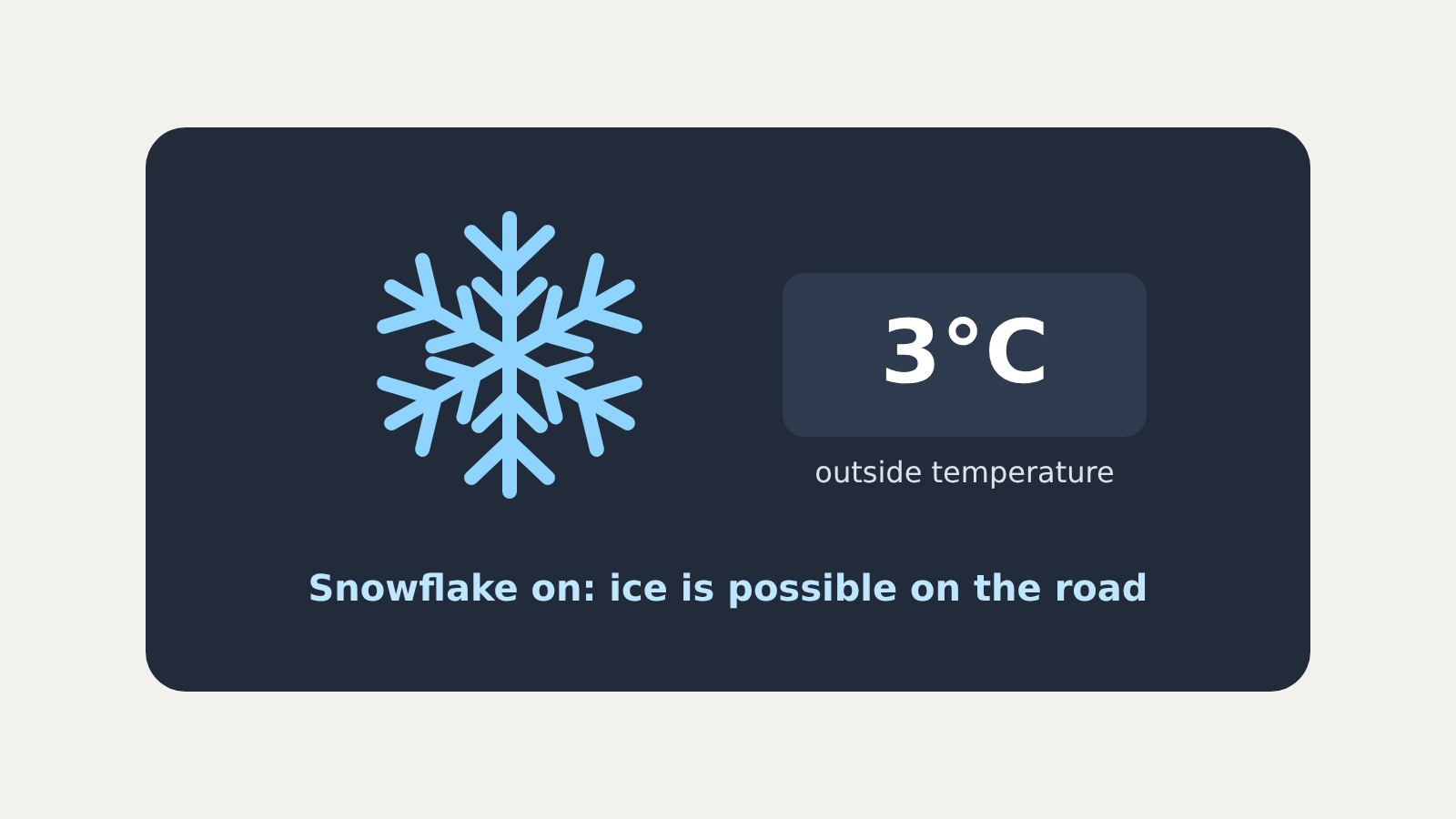
A snowflake light on your dashboard means the outside air has dropped close to freezing and there may be ice on the road. It is not a fault, and nothing on the car needs fixing: it is a reminder to drive as if the road could be slippery, even when the temperature on the display is still above 0°C (32°F).
On most cars the warning is a snowflake symbol in the instrument cluster, sometimes with a chime, or the outside temperature reading flashing for a few seconds. Some cars add a message such as "Ice possible" or "Risk of ice". When it appears, and whether it has a chime, depends on the make; your owner's manual gives the exact figures for yours.
When it comes on
Two makers' manuals give clear examples:
- Volkswagen: the snowflake appears when the outside temperature falls below about +4°C (+39°F) and stays on until it rises above +6°C (+43°F). The gap stops it flicking on and off when the temperature hovers around the trigger point.
- Mazda: on models with the outside temperature warning, a single beep sounds and the temperature display flashes for about ten seconds when the outside temperature falls below about 4°C (39°F). Mazda describes it as a warning of possible icy roads.
Other makes use different trigger points, and some cars allow the chime to be switched off in the settings menu. The meaning is the same everywhere: freezing is close.
Why it warns you before 0°C
The thermometer sits behind the front bumper or under a mirror and measures the air passing the car, not the road. Several things make the road icier than that number suggests:
- Bridges and overpasses lose heat from above and below, so they freeze before the road on either side.
- Shaded stretches, dips and roads next to open fields or water can be colder than the rest of the route, especially after a clear night.
- The reading lags. After the car has been parked in a warm garage, or sitting in slow traffic, the sensor can read warmer than the air for a while.
So a display showing 3°C can mean a dry road on your street and black ice on the next bridge. That's the point of the warning.
What to do when you see it
You don't need to stop. Adjust how you drive for the rest of the trip:
- Slow down, and leave a much longer gap to the car in front. Stopping distances on ice are far longer than on a dry road.
- Make every input gentle: smooth acceleration, early and progressive braking, no sudden steering.
- Take extra care on bridges, in shaded sections and on bends, where ice forms first.
- Expect help from the car's safety systems. If the traction or stability control light blinks as you pull away or take a bend, the system is catching a skid: ease off the accelerator and steer smoothly. If the brake pedal pulses in a hard stop, that is ABS working; keep your foot pressed down.
- Keep the windscreen clear: set the heater to the screen and use the rear window demister, as frost can form on the inside of the glass too.
If you are setting out on a cold morning, a few checks before you leave make a bigger difference than anything you do once you're moving. Beforestep's winter car checklist for snow and ice runs through them.
Other lights that turn up on cold mornings
The first frosty day of the year often brings a second light with it. The tire pressure (TPMS) warning light is the usual one: air pressure in the tires drops as the temperature falls, so tires set correctly on a mild day can read low on a cold morning. Unlike the snowflake, that light asks you to check something: measure the pressures and top them up to the figures on the door frame label.
Other snowflakes you might see
Not every snowflake on a car is the ice warning:
- On the climate controls, a snowflake usually marks the air conditioning button. Running it with the heater helps dry the air and clear a misted windscreen.
- On the gear selector or drive mode switch, some cars use a snowflake (or a W) for a winter or snow mode that pulls away more gently to reduce wheelspin.
- On some electric cars, a snowflake beside the battery or range display means the battery is cold. Regenerative braking and charging speed can be limited until it warms up; the car's manual explains what yours limits.
If you see a snowflake you can't place, the warning lights section of your owner's manual lists every symbol your car uses.
Sources: Volkswagen UK, "Outside temperature colder than +4°C (+39°F)" warning light page; Mazda owner's manuals, "Outside Temperature Warning Beep".
