Tire pressure (TPMS) warning light: what it means, solid versus flashing
In short
A solid tire pressure light means a tire is at least 25% below its recommended pressure; one that flashes for about a minute then stays on means the monitoring system has a fault. What to do for each, cold-weather triggers, and when to stop.
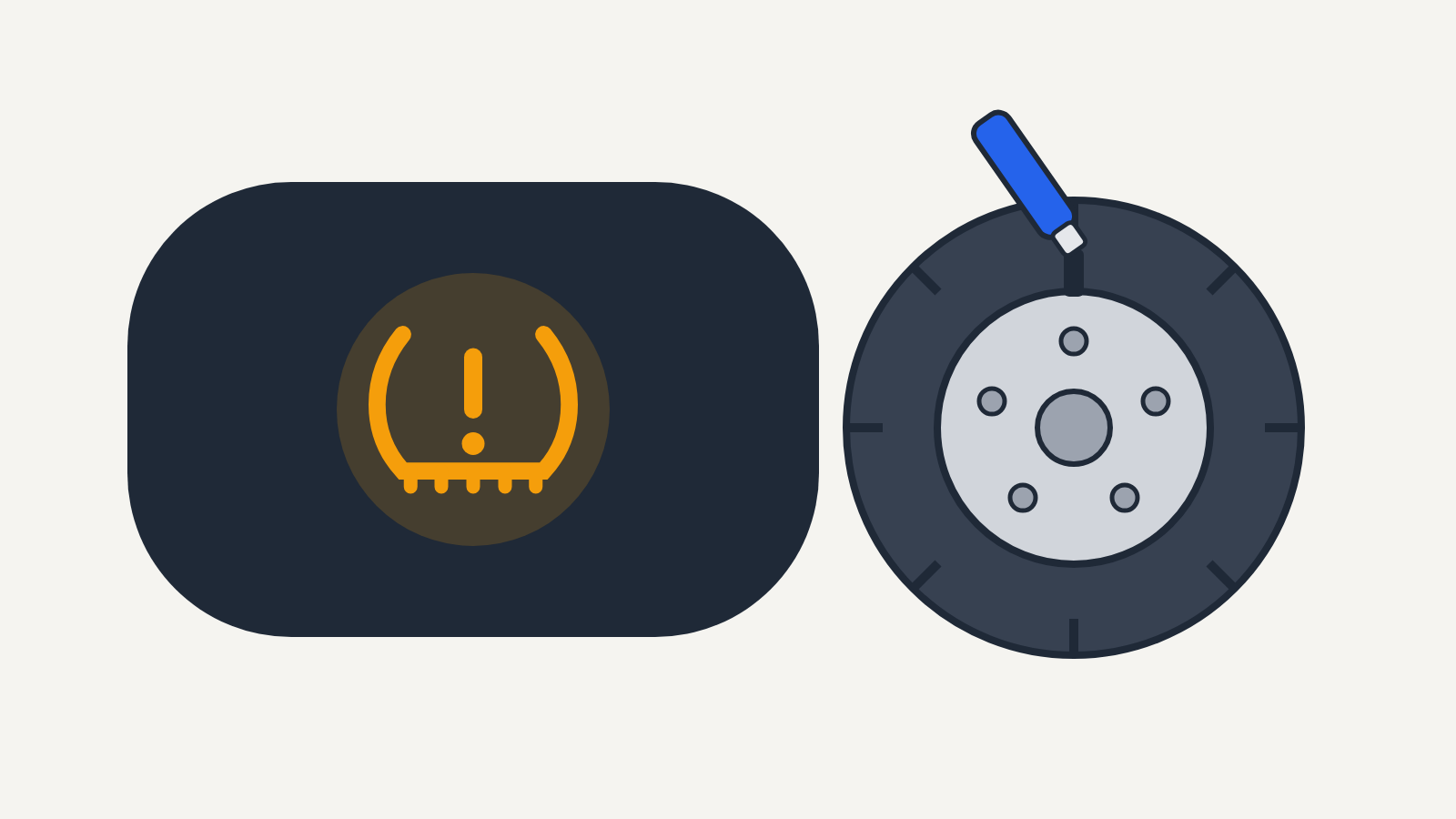
The tire pressure warning light means at least one tire is well below the pressure your car's maker recommends, or, if the light flashes first and then stays on, that the monitoring system itself has a fault and can no longer warn you. A solid light means slow down and check your tires at the next safe stop; a light that flashes for about a minute and then stays on means fix soon, because you are driving without the warning.
The light is the tire pressure monitoring system (TPMS) telltale: an amber symbol shaped like the cross-section of a tire, open at the top, with an exclamation mark inside. Some cars show a tire diagram with the low one highlighted, or a message such as "Low tire pressure" or "Check tire pressure". In the US, every new car and light truck has had TPMS since the 2008 model year under federal safety standard FMVSS 138. The guidance here follows that standard and Kia's owner's manuals, which describe the same pattern most brands use; check your own manual for your model's wording.
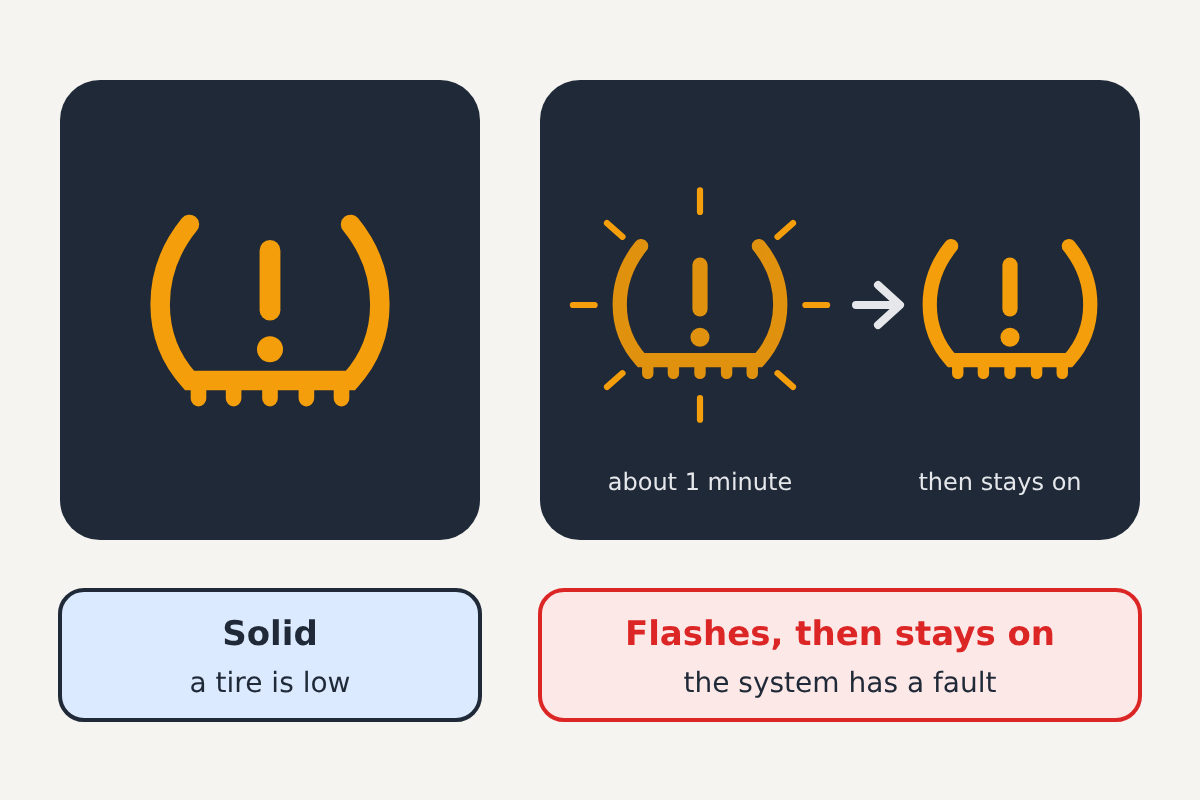
Solid light: one or more tires are low
FMVSS 138 requires the system to warn you when a tire falls 25% or more below the recommended cold pressure. On a car that wants 35 psi, that is about 26 psi or less: low enough to affect handling and braking, and low enough to overheat the tire on a long drive.
What to do, from Kia's manuals:
- Reduce speed straight away, avoid hard cornering and expect longer stopping distances.
- Stop somewhere safe as soon as you can and look at all four tires.
- If a tire is flat or clearly damaged, don't drive on it. Fit the spare or call roadside assistance.
If the tires look fine, check them with a gauge. Use the pressures on the label in the driver's door frame (or in the owner's manual), not the maximum pressure moulded into the tire's sidewall. The door-frame number is for cold tires, so the most accurate reading is before driving or after the car has been parked for a few hours.
Cold mornings are a common trigger
Air pressure falls as the temperature drops: Michelin's rule of thumb is about 1 psi for every 10°F (about 6°C). A tire set correctly on a warm afternoon can trip the warning on the first frosty morning, and the light may go off again once the tires warm up on the road. Kia's manuals point out that this does not mean the system is faulty. It does mean the tire really is low when cold, so top it up to the door-frame pressure.
Turning the light off
On most cars the light goes out on its own after the tires are inflated correctly and you have driven for a few minutes. Some models need a TPMS reset or relearn from a button or a menu in the instrument cluster; your owner's manual explains it. If the light comes back within a day or two on the same tire, that tire has a slow leak, often a nail or a leaking valve, and needs a tire shop to find and repair it.
Flashing then solid: the system has a fault
Kia's manuals describe it this way: when there is a problem with the system, the indicator blinks for about one minute and then stays on, and it repeats that at every start until the fault is fixed. Mazda and Volvo describe the same sequence. While it is in this state, the system may not be able to warn you if a tire goes low.
Common causes:
- A wheel without a sensor. Fitting the space-saver spare, a set of winter wheels or aftermarket wheels without TPMS sensors will set it off.
- A sensor's battery has run down. Most direct TPMS sensors sit inside the wheel at the valve and have sealed batteries that eventually die; the sensor is replaced, not recharged.
- Damage to a sensor or valve during a tire change, or corrosion.
- Radio interference. Kia lists snow chains and some electronic devices in the car, such as laptops, chargers, remote starters and navigation units, as things that can interfere with the signal.
The car is fine to drive while you arrange a repair, but check your tire pressures by hand every couple of weeks until it is fixed, because the warning you rely on is out of action. A tire shop or dealer can read each sensor with a TPMS tool and tell you which one has failed.
When to stop driving
Pull over and stop if the light comes on together with a pulling steering wheel, a thumping noise or vibration, or a tire you can see is flat. Driving on a badly under-inflated tire can make it overheat and fail, and it can damage the wheel. Use your hazard lights, stop well away from traffic, and call roadside assistance rather than changing a tire on a narrow shoulder.
If the light came on at the same time as other warnings, read each one: the amber engine symbol is covered in our guide to a steady versus flashing check engine light.
Don't disable it
Some forums suggest coding out the TPMS or fitting dummy sensors to get rid of the light. Don't: the system is a required safety feature, and turning it off leaves you with no warning before a tire fails. Fix the sensor or the leak instead.
Sources: US Federal Motor Vehicle Safety Standard No. 138 (49 CFR 571.138); Kia owner's manuals (low tire pressure telltale, TPMS malfunction indicator); Michelin tire pressure FAQ.
