Engine temperature warning light: what the red thermometer means and when to stop
In short
A red thermometer light or a needle near H means the engine is overheating. Here is what to do in the first minute, what to check once it cools, and when to get a tow.
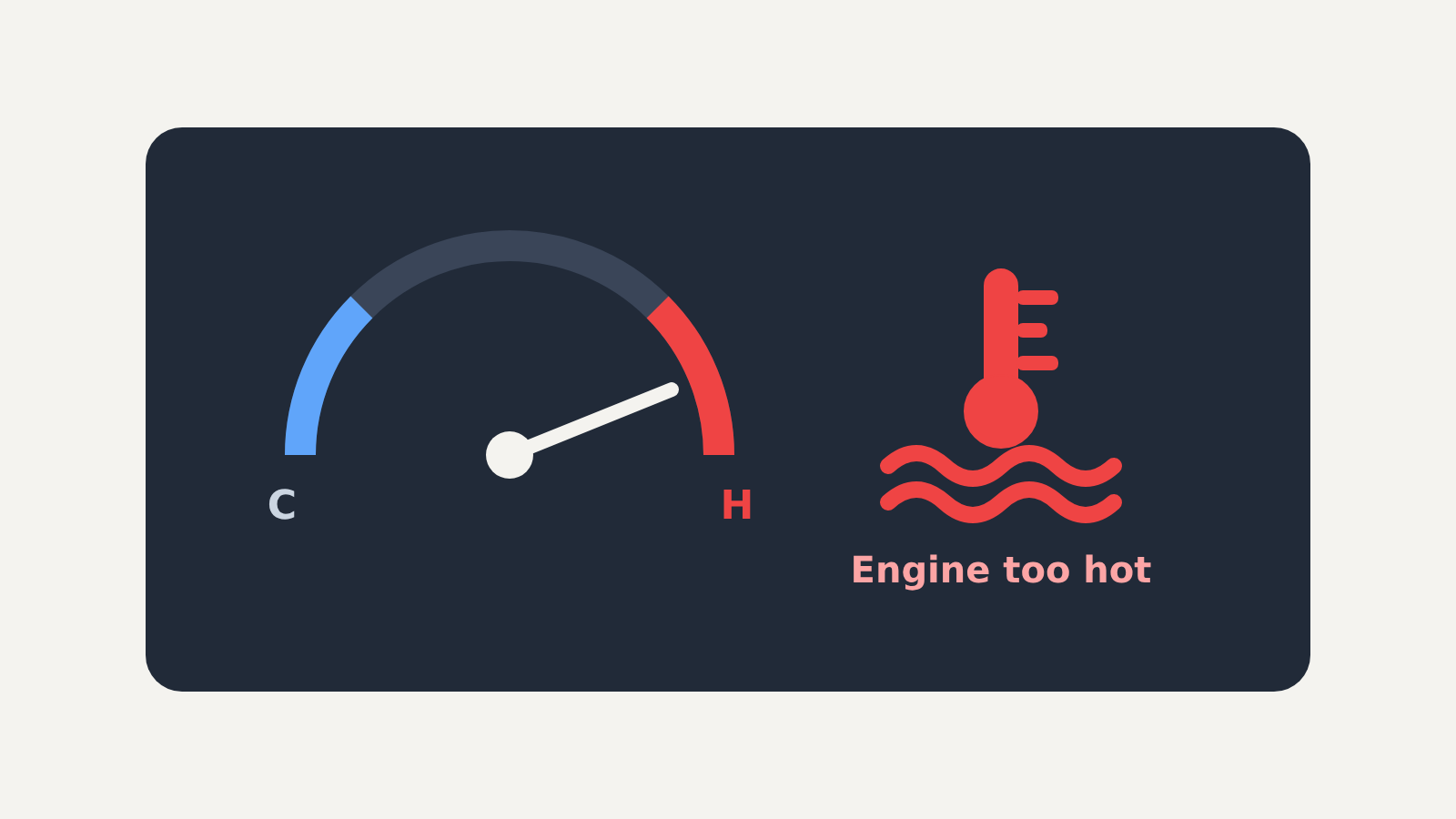
A red thermometer symbol, or a temperature needle climbing towards H, means the engine is overheating: the cooling system can no longer carry heat away fast enough. Treat it as "stop now". Pull over as soon as it is safe and switch the engine off, because a few more minutes of driving can warp the cylinder head or blow the head gasket, which turns a cheap fix into a very expensive one.
The symbol is a thermometer standing in two wavy lines (the coolant). Some cars show it only as a light, some only as a gauge, many as both, and some add a message such as "Engine overheating" or "Coolant temperature high". The wording varies by make, so your owner's manual lists the exact messages for your model. This guide applies to petrol and diesel cars; hybrids and electric cars have separate warnings for their battery cooling, covered in their manuals.
Red, blue, or just a high needle
When you switch the ignition on, most warning lights flash up for a moment as a bulb check. That's normal.
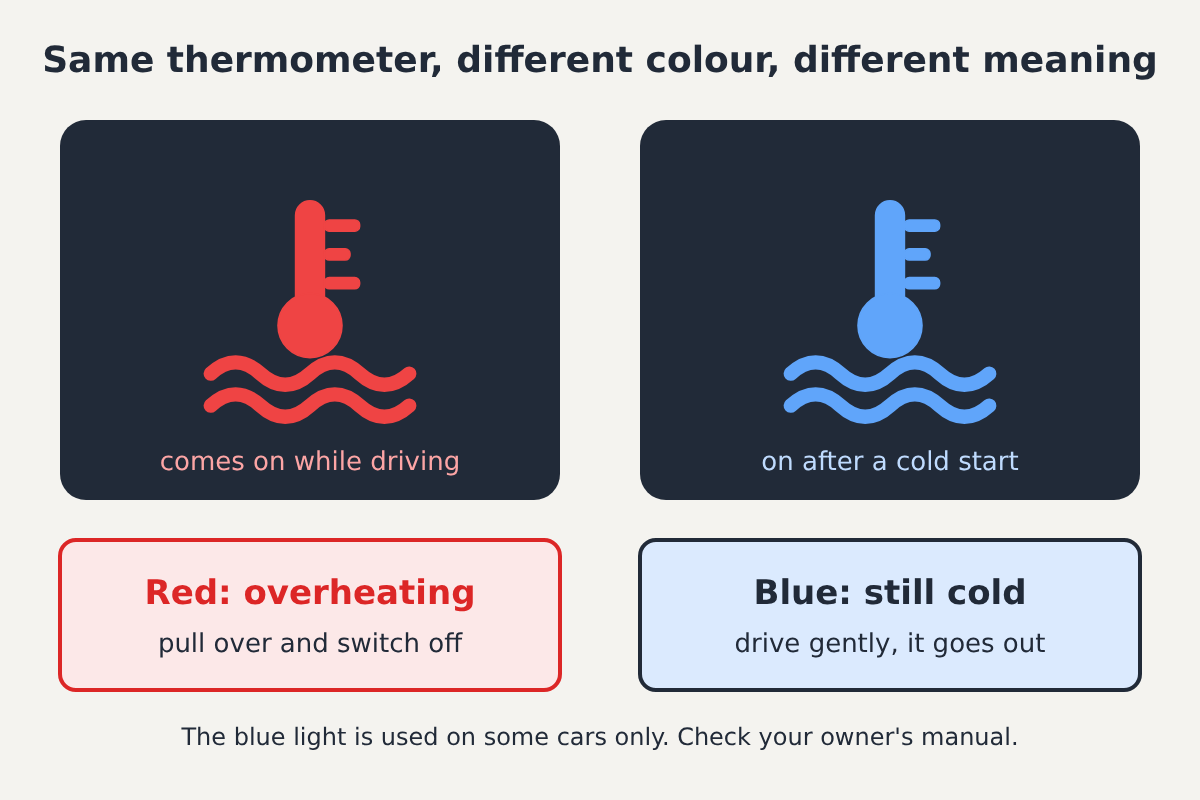
Some cars also have a blue version of the same symbol. It comes on after a cold start and means the engine hasn't reached its working temperature yet. Drive gently, avoid high revs, and it goes out on its own after a few minutes. It isn't a fault, and on a frosty morning it may stay on a little longer.
A red light, or a needle well past the middle of the gauge, is the one that matters. On most cars the needle sits at or near the middle once warm and barely moves, so any steady climb above that is worth noticing even before the light comes on.
What to do now
- Switch off the air conditioning. It adds load to the engine.
- Turn the heater to full hot and the fan to maximum. It feels odd, but the heater works by pulling heat out of the engine's coolant, so it takes a little load off the radiator while you find a place to stop.
- Pull over as soon as you safely can, and switch the engine off. Put the hazard lights on.
- Don't open the bonnet if you see steam pouring out. Wait for it to stop.
- Never open the radiator cap or the coolant expansion tank cap while the engine is hot. The system is under pressure, and hot coolant can spray out and scald you. Wait until the engine has cooled, which takes at least 30 minutes and often longer.
Stop-and-go traffic makes overheating worse, because there is little air flowing through the radiator. If you are stuck and can't pull over yet, keep the heater on full, leave a gap to the car in front so you aren't creeping, and get off the road at the first safe place.
What causes it
The cooling system pumps coolant (a mix of water and antifreeze) around the engine and through the radiator at the front, where air cools it. The engine overheats when something in that loop stops working. The usual causes are:
- Low coolant, from a leak in a hose, the radiator, the water pump or the head gasket.
- A radiator fan that isn't switching on, from a failed fan motor, relay or fuse.
- A thermostat stuck closed, so coolant doesn't reach the radiator.
- A failed water pump, or a broken drive belt on engines where the belt drives the pump.
- A blocked radiator, inside or out.
One clue in winter: if the heater suddenly blows cold air while the temperature is rising, the engine is often low on coolant. With too little in the system, hot coolant no longer reaches the heater.
What to check once it has cooled
With the engine off and cool:
- Coolant level. Find the translucent expansion tank (your manual shows where) and compare the level with the MIN and MAX marks on its side. Below MIN means coolant has been lost somewhere.
- Leaks. Look under the car for a puddle. Coolant is usually green, pink, orange or blue, and smells sweet. Keep pets and children away from it; it's poisonous.
- Hoses and belt. Look for a split or wet hose, and a belt that is missing or hanging loose.
If the level is low and you can see no obvious leak, you can top up to between the marks with the coolant type named in your owner's manual. In an emergency plain water will get you to a garage, but it weakens the antifreeze, so in freezing weather have the mixture corrected soon. Topping up is not a repair: coolant doesn't disappear by itself, and the garage needs to find where it went.
Can you keep driving?
Not while the light is red or the needle is near H. Stop and let it cool. If the coolant was low, you've topped it up, and the temperature stays normal when you set off again, you can drive gently to a garage while watching the gauge. If it climbs again, stop again and call for roadside assistance.
Get the car towed instead if the belt has broken, coolant is pouring out, the tank was empty, you see white smoke from the exhaust, or the red oil light also comes on. Oil thins out when an engine overheats, so a red oil can on the dash at the same time means stop immediately, as with any red oil pressure warning.
If the red battery light came on first and then the temperature rose, the drive belt has probably snapped; our guide to the battery light coming on while driving explains that case. For an amber engine symbol rather than a thermometer, see what a steady or flashing check engine light means.
