LG dryer d80, d90 or d95 code: what the Flow Sense warning means and how to clear it
In short
d80, d90 and d95 on an LG dryer mean the exhaust duct is about 80, 90 or 95 percent blocked. Here is how urgent each one is, how to clear the duct safely, and when to call a vent cleaner or LG service.
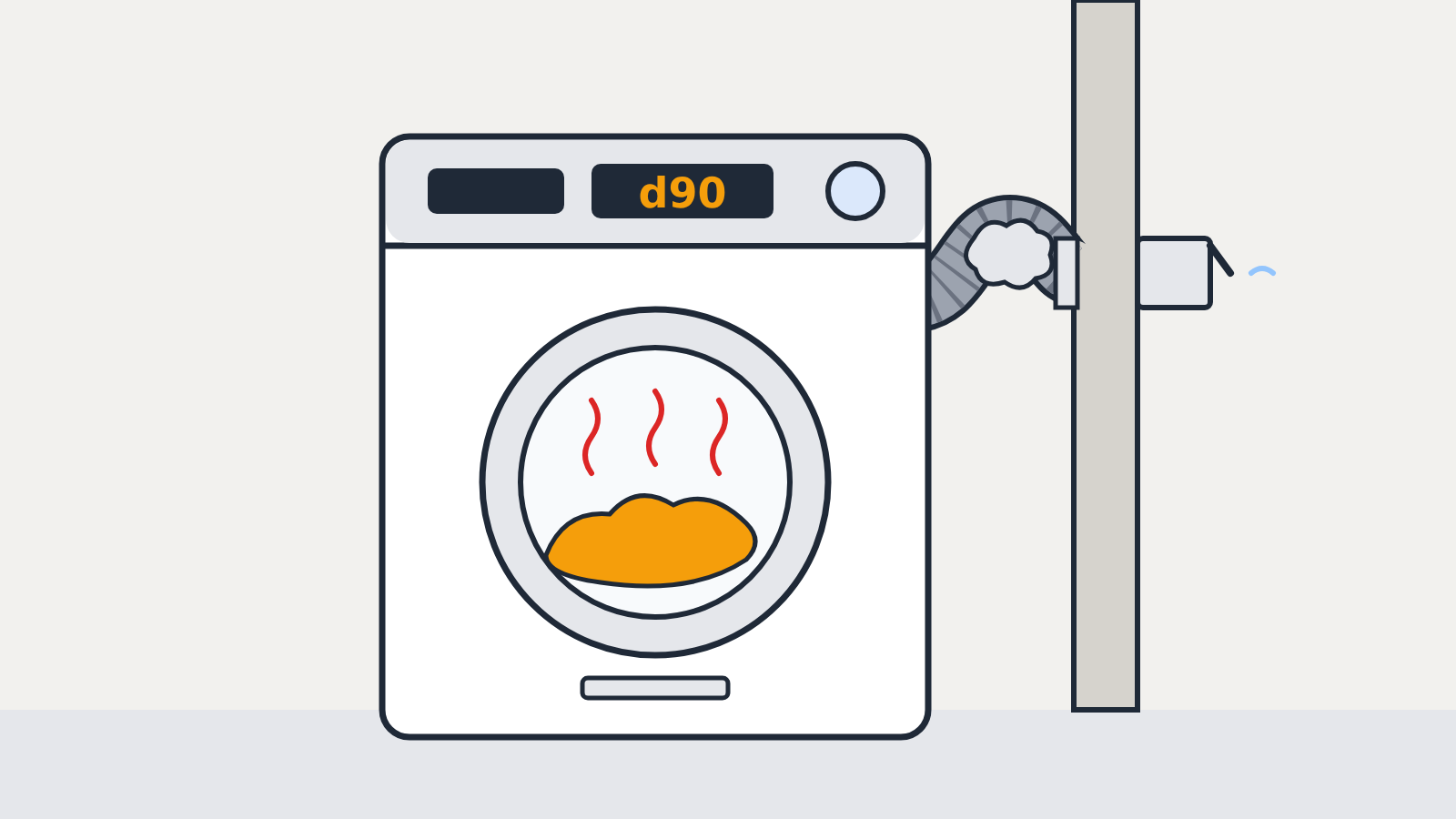
d80, d90 or d95 on an LG dryer is a Flow Sense warning: the dryer has measured that its exhaust duct is about 80, 90 or 95 percent blocked. It is not a fault in the dryer itself. Treat d80 as fix soon, and d90 or d95 as stop now: LG's own page on those two codes says not to use the dryer until the exhaust system has been cleaned and repaired. A dryer that can't push hot, lint-laden air outside runs hotter and takes longer, and that is a fire risk.
This applies to LG electric and gas dryers with Flow Sense that show the codes on the display. The letter is a lower-case d, so the display reads d80, d90 or d95. LG's error code list describes all three the same way: "the dryer's exhaust duct is clogged", with the number giving the level of restriction. Exact behaviour varies by model, so keep your owner's manual to hand.
What you might notice before the code
A restricted duct rarely appears out of nowhere. LG's Canadian support page lists the signs: longer drying times, a hotter dryer, and loads that need more than one cycle. If the laundry room feels warm and humid after a load, or the top of the dryer is hotter than usual, the air is going somewhere other than outside.
Safety first
- Stop using the dryer if it shows d90 or d95, and switch it off before you move it.
- Unplug it before you pull it out or disconnect the duct. An electric dryer runs on a 240-volt supply.
- On a gas dryer, close the gas shut-off valve behind it before you move it, and move it gently so you don't strain the gas line. If you smell gas at any point, leave the house, don't operate switches, and call your gas supplier from outside. A blocked vent on a gas dryer also traps combustion gases, which is another reason not to keep running it.
Step 1: Clean the lint filter
Pull out the lint filter and clear it, and LG's advice is to do this between every load. It also suggests drying smaller loads while you sort the duct out.
Step 2: Check the airflow outside
Find where the duct leaves the house. With the dryer running on a heated cycle, you should feel a strong, warm flow of air at the vent hood. If the flaps barely move, the blockage is somewhere between the dryer and that hood.
While you're outside:
- Clear lint, leaves, snow and nests from the hood.
- Make sure the flaps open fully. LG says to replace the exhaust cover if they can't.
- Keep plants and stored items away from the outlet.
Step 3: Check the duct behind the dryer
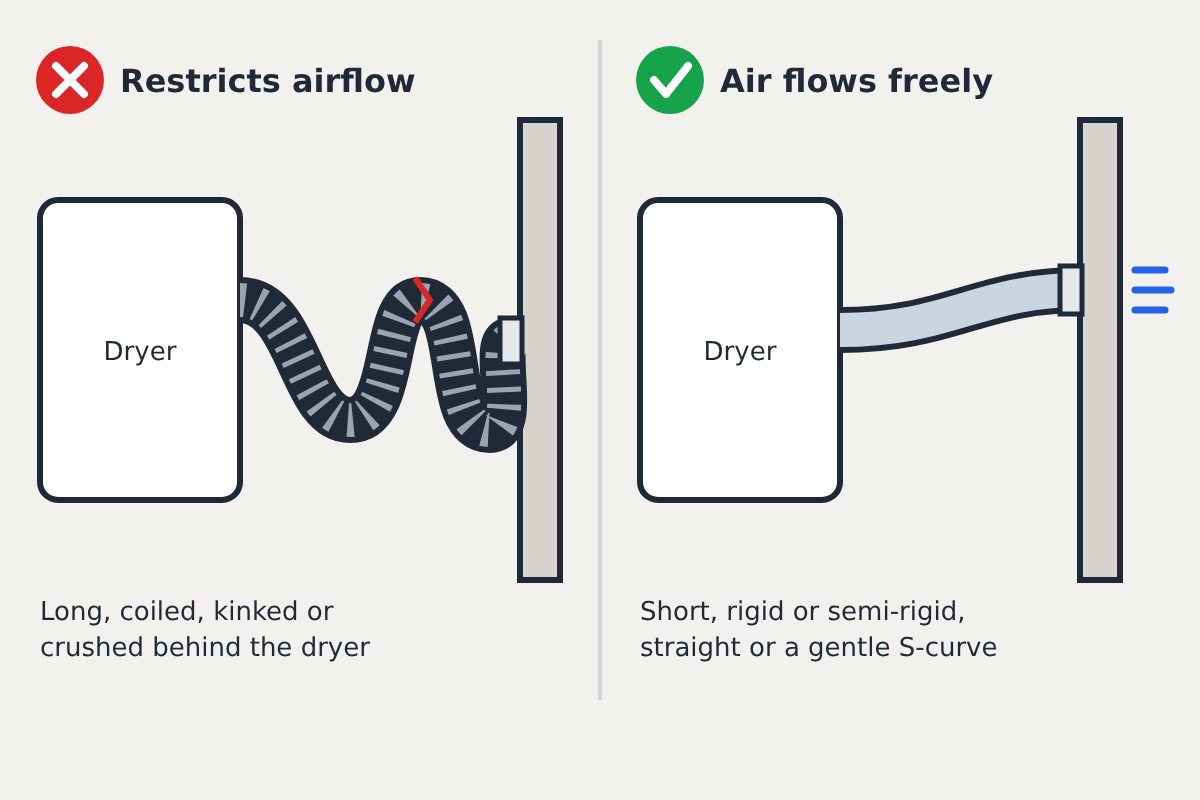
Unplug the dryer (and close the gas valve on a gas model), pull it forward and look at the duct. LG lists the usual culprits:
- A hose crushed against the wall, kinked, or coiled like a spring.
- Holes, tears or loose joints where lint escapes and collects.
- A flexible plastic or thin foil hose. LG asks for rigid or semi-rigid duct, running straight or in a gentle S-curve.
Disconnect the duct from the back of the dryer, clear any lint from the outlet and from the duct, reconnect it with the joints secure, and push the dryer back without folding the hose. Don't leave the dryer venting into the room.
Step 4: Run a few loads to clear the code
There is no special button sequence in LG's guidance. Once air flows freely, run a normal drying cycle and check the outside vent again. LG notes that on some models Flow Sense needs several cycles in a row with good airflow before the warning goes away, so a code that lingers for a load or two after a real fix is not a sign you missed something.
When it's a job for a professional
- The duct is long or has several bends. A run through a ceiling or wall can't be cleared from behind the dryer. LG recommends a dryer vent cleaning service for this, and once a year as routine. Ask them about the duct's length and how many 90-degree bends it has, then compare that with the installation limits in your owner's manual.
- The code stays after the duct is cleaned or replaced. LG says the blower may then be faulty, and the dryer needs service. Book it through LG or a qualified appliance technician rather than opening the cabinet.
- On a gas dryer, d80 won't clear. LG's code list says d80 on a gas model can also mean the dryer isn't getting enough gas. Check that the shut-off valve is fully open and the line isn't kinked; if that isn't it, call a gas-qualified technician.
Other LG dryer codes people mix up with d80
- dE (or d-E): the door isn't fully closed. Push the lint filter all the way in and check for clothing caught in the door.
- GAS, which can look like 9A5: a gas dryer isn't getting gas. LG points out that 9A5 is just the display spelling out "GAS".
- nP: no power is reaching the heater, so the dryer tumbles without heat. Check the dryer's breakers and outlet.
If your washer is the one throwing codes, LG washers have their own set: IE when the washer won't fill and OE when it won't drain.
Sources: LG's support library pages "LG Dryer – Understanding d90 and d95 error codes" and "LG dryer error code list" (lg.com/us), and LG Canada's Flow Sense warning page (lg.com/ca_en).
